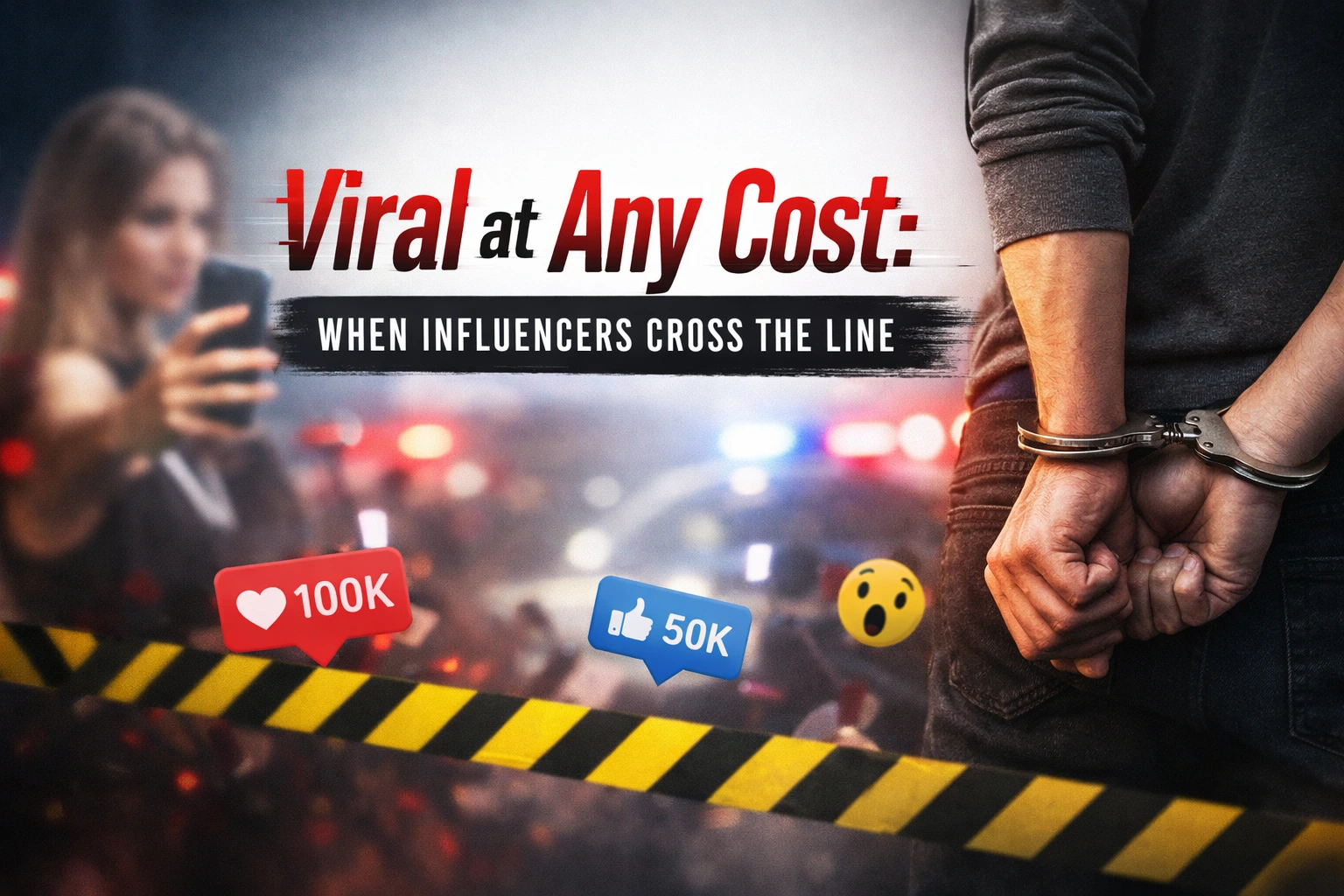
In the pursuit of Insta fame, many cases of influencers gone wild show creators taking increasingly extreme steps to gain attention. Bonnie Blue drew controversy through her “400-man challenge” and pregnancy mystery, while Johnny Somali faced criticism over harassment and deepfake scandals; both cases relied heavily on shock value. Vitaly Zdorovetskiy turned risky IRL content into legal trouble. MrBeast faced scrutiny over his involvement in fintech projects aimed at younger audiences. August Vallat also faced backlash after a campsite controversy damaged his eco-friendly image. Despite their differences, these cases highlight a common goal: to manipulate attention and maintain visibility online. But as these influencers gone wild are facing prison or ban, one wonders if the viral high is truly worth the consequences.
Behind the Scenes of Shocking Trends and Viral
Moments
The rise of influencers gone wild in early 2026 shows the growing pressure creators face to attract attention. Competition on Social media for influencers has become more intense than ever. As the race for Insta fame grows, some creators resort to extreme behavior to stand out. Many do so in an effort to stay relevant as platform algorithms continue to change.
What got Bonnie Blue famous?
Bonnie Blue gained widespread attention online after claiming to have taken part in a controversial “400 men” challenge. The performance was based on making some very personal claims within a very short period of time. The news of her challenge became widespread through social media sites and caused much discussion. She became famous and became an influential Instagram star who serves as a perfect example of the phenomenon known as “gone wild.”
What she knows for sure is that she will remain in the spotlight for a very long time after making a sensation. It is a calculated move to manipulate the algorithms and get people talking in the comments. Whether you like her or not, you cannot deny that she knows how to use Social media for influencers to her advantage.
Bonnie Blue’s later fueled speculation with a controversial pregnancy claim’
After making waves from an inflammatory publicity stunt that Bonnie Blue was involved in, her story has since become one of the largest talking points in online culture. It also fueled conversations about influencers gone wild, the pursuit of Insta fame, and how some creators use extreme behavior to stay relevant on Social media for influencers.
Well, it looks like we have switched back to that topic because she claimed that she was pregnant, and that just added to the mystery regarding her timeline. While for some people, this has turned out to be one more desperate attempt at trying to stay in the limelight, for others, it is the result of the pressure felt by the influencers through social media.
What really turns out to be fascinating in all of this is the way the discussion helps keep the audience entertained and engaged.
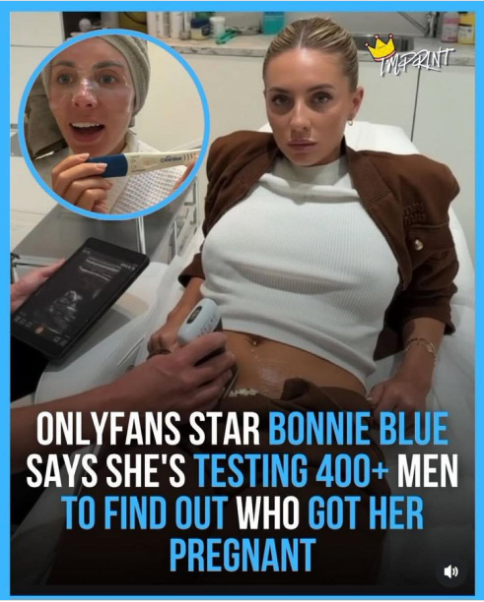
Image credits: @tandrcak.vreteno
Why did Bonnie Blue get kicked off OnlyFans?
Interestingly enough, even the platforms that host adult content have their limits. Reportedly, Bonnie Blue found herself banned from OnlyFans after some of her stunts went too far. It shows that even in spaces where influencers gone wild is usually encouraged, there are lines you should not cross.
When an influencer is trying to stay relevant, they often forget that platforms have terms of service. She was inspired by the high earnings of others, but her extreme behavior led to her losing her main source of income. Now, she is focusing on lifestyle content and her pregnancy saga, which is a whole other mystery. Arising questions about the biological father and many more, and it is driving her followers crazy.
The Psychology Behind Her Extreme Behavior
Bonnie Blue’s antics stem from the pressure to stay relevant in saturated markets.
● Viral Hooks: Raw videos explode on platforms, driving subscriber spikes.
● Monetization Edge: Extreme behavior converts views to paid content.
● Audience Coercion: Fans enable it, creating a feedback loop of escalation.
Her story inspired debates on whether such risks justify the rewards.
https://youtu.be/qGXui74818w?si=n6Sp-_o0S1fa6IZu ( credits: @BonnieBluexox )
The Legal Consequences of Johnny Somali’s Actions
If Bonnie Blue is about adult stunts, Johnny Somali is about being a public nuisance. According to Pubity, Johnny Somali has built a following by filming himself provoking people around the world. These influencers have gone wild at their most dangerous. In South Korea, he faced criticism for harassing people and showing disrespect toward national monuments. For many, this was seen as an attempt to get attention online and become famous on Instagram through outrageous actions. Due to his outrageous actions, he will now be facing some severe legal troubles. According to the recent reports from Sportskeeda, Johnny Somali might end up being required to register as a sex offender in South Korea because of the allegations of deepfake content. This shows how online escalations can result in serious consequences for Johnny Somali. It is a massive price to pay for Insta fame.
Why Is Johnny Somali’s Mom Begging the Court for
Help?
It has gotten so bad that his mother has had to step in. She is asking for Leniency in South Korean courts. It is honestly a bit sad to see a parent have to clean up the mess of influencers gone wild.
Allegedly, his mom is likely trying to show that he is just a young man who got carried away. She was able to submit a formal “letter of reflection” and a petition that supposedly pointed out his clean history of violence and his young age. The charges remained in place. However, legal experts said the judge considered the family’s request for mercy when deciding the sentence. This was treated as a mitigating factor in the case.
But the courts are not usually moved by that when the extreme behavior is caught on camera for thousands to see. He used Social media for influencers to broadcast his actions, and now that evidence is being used against him.
10 years for Johnny Somali?
There are rumors and legal discussions suggesting he could face a very long time in prison. While 10 years might be the upper limit of various combined charges, even a few years in a foreign prison is a nightmare. This is what happens when influencers gone wild stop being a joke and start being a criminal record.
He attempted to stay relevant by being a bad person. Now, perhaps the bad person is in a cell. At the final hearing, which took place on February 27th, 2026, the reality of the situation finally became apparent. The prosecutors officially recommended a sentence of three years in prison with hard labor. This is not the Insta-fame that any individual should strive for.
Is He Proud of It? : Contradictory Behavior and Forced Apologies
The most frustrating part about Johnny Somali is his contradictory behavior. One minute, he is submitting a “letter of reflection” to the court to show he is sorry, and the next minute, he is on a stream calling the country stupid. This is an obvious attempt to manipulate the justice system, yet he attempts to stay relevant with his toxic fan base.
This type of behavior demonstrates a lack of respect. According to reports, He is not sorry; he is scared. Most influencers’ gone wild stories end with a fake apology video, but Johnny Somali is finding out that real life does not have a “delete” button. He was inspired by the attention, but now the attention is coming from prosecutors.
His cases highlight risks for aspiring creators:
● International Bans: Repeated arrests lead to deportations.
● Public Backlash: Clips fuel hate, eroding Insta fame.
● Inspired Reforms: Platforms now flag similar streams faster.
Johnny Somali’s saga warns of the dark underbelly.
https://youtu.be/oVzWwfmhEmQ?si=xufi7-0wHkXR1TRr (video credits: Johnny Somali)
Jarvis Reach
If you are a creator who wants to grow without doing all this crazy stuff, you should look into professional tools. For example, Jarvis Reach helps businesses improve their outreach and email marketing. It offers specialized services that make these processes more effective and easier to manage. You should definitely visit Jarvis Reach if you want to build a real business instead of just chasing Insta fame through stunts. Using a platform like Jarvis Reach helps you stay professional.
IShowSpeed and the Cost of Viral Chaos
IShowSpeed is one of the biggest names on Social media for influencers. He made himself known due to his lively live streams, his viral moments and his erratic style, nonetheless, there have been many instances where he came into hot water for making controversial posts due to his becoming famous on Instagram. This example serves to illustrate just how the pressure to remain relevant drives certain people to take risks.
Norway Livestream Chaos (2024)
IShowSpeed became the center of global attention during his 2024 Europe tour when massive crowds gathered around his livestream appearances. According to multiple reports, like NDTV, a chaotic incident in Norway led to safety concerns, injuries and crowd control problems. The episode showed how the pursuit of Insta fame and viral moments on Social media for influencers can quickly escalate into real-world risks.
IShowSpeed targets Insta fame mainly through promotion of:
- livestream culture
- influencers attracting uncontrollable crowds
- viral attention turning into real-world risk
- pressure to constantly create spectacle
Fireworks Livestream Incident
One of IShowSpeed’s most viral controversies involved setting off fireworks indoors during a livestream. The stunt quickly spread online and drew criticism for promoting reckless behavior and many viewers saw it as another example of how extreme behavior can be rewarded with attention and engagement.
Distracted Driving Livestream (2026)
In 2026, IShowSpeed faced criticism after a viral livestream showed him repeatedly looking at his phone while driving. According to Hindustan Times, the, near-accident reignited debates about creator responsibility and the risks involved in chasing viral content.
The Collapse of Vitaly Zdorovetskiy
The culture of influencers gone wild tends to support daring, yet the experience of Vitaly
Zdorovetskiy indicates that daring can be turned into recklessness. After being
renowned for being fearless in his pranks, Vitaly slowly changed his role from being a
showman to a disruptor. His experience is indicative of the changing nature of online content creation. More and more content creators feel compelled to up the ante to keep their viewers captivated. In trying to become an Instagram sensation, some take increasingly outrageous actions.
From Viral Pranks to Dangerous Obsession
This shift shows how the pursuit of digital validation can distort creative boundaries. As creators chase attention and Insta fame, they often feel pressured to take bigger risks. Over time, these efforts may bring less attention than before, pushing some toward increasingly extreme behavior to stay relevant.
This shift has not been immediate but progressive and supported by the success of
algorithms. His strategy was confirmed every time with a viral video, which promoted
more radical measures. What started as jokes developed into thought-out performances
aimed at causing outrage. This shift shows how the pursuit of digital validation can distort creative boundaries. As creators chase attention and Insta fame, they often feel pressured to take bigger risks.
The BGC Mall Incident: When Content Became Crime
The incident of Bonifacio Global City was the turning point in Vitaly’s career. The
planned second viral livestream grew into a case of harassment, breach of safety, and
disturbance of the population. His interactions with security officers often pushed legal boundaries. What may have started as a stunt for attention eventually crossed the line into criminal behavior.
This was when the net was revealed as a thin line between entertainment online and
the end results in real life. Livestreaming only fueled the chaos by making it real-time
Reactions to the audience are acceptable even more. aking it real-time reactions to the audience are acceptable even more. Without time to edit or reflect on his actions, Vitaly acted impulsively. As a result, he faced immediate legal consequences for his behavior. The incident is used as a case study of how digital spontaneity may
have an irreversible effect.
An Escalation, Not an Accident
Vitaly’s arrest is not an isolated incident but rather just one result of a prolonged trend. This guy has a habit of stirring up controversy. The strategy he employs is consistent, testing limits, creating a stir, and benefiting from viral publicity. This strategy is common among influencers who have lost their way. Everything escalated to hiking up iconic spots, playing confronting tricks, and the rest.
This trend is indicative of a larger problem in influencer culture; success usually relies on growth. Once the viewers get desensitized, creators get the urge to increase the stakes. In the long run, this results in a cycle of normal content not being satisfying and extreme behavior becoming the norm. Vitaly’s story shows what can happen when someone keeps pushing boundaries. Over time, risky behavior can start to feel normal. The attention and rewards may encourage even bigger actions. However, the backlash can eventually become greater than the benefits. This pattern is common in many cases of influencers gone wild.
The Greater Trend: IRL Streaming Gone Wrong
Vitaly’s story reflects a larger trend in IRL streaming. In this type of content, creators broadcast their real-life interactions live to engage viewers. Unlike pre-recorded videos, livestreams have few filters or edits. This makes the content feel more unpredictable and authentic. As a result, livestreams often create opportunities for viral moments and rapid Insta fame.. Nevertheless, the format does promote impulsive actions based on the feedback of the audience, as well.
Since viewers are giving chaos the attention and donations, creators might be motivated
to stir up reactions, whatever the cost. This dynamic brings ethical and safety issues of
concern, not only to creators but also to the population. The emergence of “gone wild” influencers at the beginning of 2026 reflects how difficult the task of creating buzz is getting. It is even more competitive among influencers on social media than ever before. In order to be successful on Instagram, some creators go to great lengths.
Credits
● https://www.youtube.com/watch?v=bwmiKy3pgas (credits: Philstar News)
MrBeast and the Fine Line Between Influence and Risk
MrBeast represents a different type of influencer. He built his success through large-scale creative projects, generosity, and engaging content rather than controversy. But his move into financial platforms brings about new complexities. The impact of influencers gone wild becomes even more serious when it reaches industries such as fintech. In these sectors, creators can influence decisions involving money and personal finances. This raises important questions about responsibility, ethics, and the risks of profiting from the trust that audiences place in them.
The Evolution of the “Good Guy Creator”
The emergence of MrBeast was founded on the combination of entertainment and
charity. He transformed the definition of a creator by blending high-pressure tasks and
being generous. His work, which made viewers feel that they are part of something
bigger than entertainment, was full of emotional responses.
This stance enabled him to create unmatched trust among his audience. His brand had
a positive influence and effect, unlike controversial creators. But responsibility is also
increased by this trust. When an influencer like this enters the new fields, primarily
finance, the expectations change. Viewers are no longer content consumers; they
depend on direction, and each action becomes more decisive.
The Step App Controversy: Where Influence Meets Finance
The acquisition of Step brought MrBeast into the financial technology sector. This industry is far more sensitive than entertainment. Step is aimed at younger users, which creates added responsibility. The platform also carries risks, especially when it comes to areas such as cryptocurrency.
The scandal came because of the fear of subjecting the minors to unstable financial
markets. Unlike traditional content, financial tools can directly impact users’ lives. This shift gives influencers greater power over the decisions their audiences make. Their recommendations can have long-term effects, especially in areas like finance. The case highlights the challenges influencers face when they move beyond their original fields. In these industries, the consequences can be far more significant than views, likes, or engagement.
Why This Went Viral
All these occurred when the policymakers, one of whom was Elizabeth Warren, got
involved in the situation. She raised the matter into a social concern, instead of simply
the activity of the creator. This, along with the huge influence, the financial risk, and the
exposure of young people to the new viral conversation, was a ticking time bomb.
Also, the story undermined the image that MrBeast had. Instead of the audience being
used to his philanthropic image, it was introduced to an even more complicated reality.
This opposition created arguments at all levels, with those who supported the stance
and the opposition providing contradicting views. Virality was not only based on the
issue, but on the disappointment between expectation and reality.
The Real Fear: Influence Without Friction
At the core of the controversy lies a fundamental concern: unfiltered influence. MrBeast can reach millions of people almost instantly. Because of this, his actions and recommendations can have a wide impact. In traditional financial systems, advice is usually subject to rules and oversight. Influencer-driven platforms often have fewer barriers. This makes trust an even more important issue when creators expand into areas such as finance.
Such absence of friction gives rise to the situation when users can embrace tools or ideas without even realizing the dangers. It is not about motivation, but magnitude and influence. When influence bypasses traditional safeguards, the risk of unintended consequences increases. In such situations, accountability becomes a major concern. This is especially true when creators have the power to shape important decisions made by their audiences.
Credits
● https://www.instagram.com/reel/DWUbrorFJox/ (credits: @coinmarketcap)
The Fall of August Vallat: When Authenticity Breaks
The story by August Vallat demonstrates how weak authenticity is in influencer culture.
His brand was built around sustainability and respect for nature. This helped him gain support from audiences interested in responsible travel. However, when his actions appeared to contradict those values, the backlash was quick and severe. The incident showed how easily trust can be lost in the digital age.
The emergence of the Eco Influencer
August Vallat built his reputation around sustainable travel and respect for nature. He encouraged responsible outdoor practices and environmental awareness. His content attracted a large audience interested in sustainability and travel. Over time, he developed a loyal following. Unlike many cases of influencers gone wild, his brand was built on credibility and trust. In this niche, audiences expected creators to live by the values they promoted..
The eco-influencing is attractive because it is not based on entertainment itself but on
values. It is not just followers who watch, but believe. The result of this relationship is an
increased commitment as well as expectations. Any form of nonconformity to these
values is not perceived as an error, but an act of betrayal, so authenticity is both a
strength and a weakness.
The Isle of Skye Incident
According to a June 2025 report by Outdoors Magic, Adrian Trendall raised concerns about the condition of August Vallat’s campsite on the Isle of Skye, alleging that it conflicted with the environmental values promoted in his online content. The controversy sparked wider discussions about authenticity, accountability, and credibility on Social media for influencers. The fact that the environment was destroyed and neglected was the opposite of what he taught. The incident had soon become popularized, not necessarily due to the performing acts, but due to perceived hypocrisy.
This would be one of the most popular moments since it questioned the credibility of influencer stories. Such inconsistencies increase criticism in a time when people are becoming more and more skeptical.
The Confrontation That Sparked Virality
The episode between Trendall and Vallat served a vital role in escalating the situation.
Trendall made a personal conflict into a social story by recording and publishing the
conversation. Such openness gave viewers an opportunity to make their judgments
using the things they could see.
Virality was motivated by the level of emotional depth of the exchange. The viewers
were attracted to the war, comparing both parties and speaking about accountability.
This situation shows how local events can quickly gain global attention in the digital age. This is especially true when they connect to larger concerns about authenticity, trust, and ethical behavior. Such cases often spark broader debates across Social media for influencers.
Vallat’s Response: The Mistake That Made It Worse
The fact that Vallat chose to reject the accusations as fake news contributed greatly to the situation. Instead of addressing the concerns or admitting mistakes, the response created even more mistrust. In influencer culture, accountability plays an important role. Audiences are often more willing to forgive mistakes when creators are open and honest about them.
This response transformed the story into a crisis of credibility. Fans also started doubting not only the incident, but the whole brand of Vallat. The lack of accountability made the situation worse and strengthened the negative perception. It also showed that, on Social media for influencers, the response to a controversy can have a greater impact than the controversy itself. In an era shaped by Insta fame, audiences often pay close attention to how creators handle criticism and mistakes.
The Sponsorship Scandal
This disclosure that Vallat had been lying that he was a partner with well-known brands
was another twist to the scandal. This finding discredited his professionalism, making it
not a behavioral matter but a breach of trust. Brand associations are major factors of
influencer legitimacy, and fake assertions can be very serious.
This element of the narrative appealed a lot to the audiences as well as industry
players. It has emphasized the role of transparency and verification in influencer
marketing. The incident showed that credibility takes time to build but can be lost very quickly. Contradictions, misleading claims, or false information can damage trust. As the case of August Vallat demonstrated, authenticity remains essential on Social media for influencers.
Credits
● https://www.facebook.com/thenationalnewspaperscotland/posts/new-danis h-influencer-august-vallat-has-been-told-to-show-some-respect-after-he-/13 00381885422938/ (credits: @The National Newspaper)
Inside MrBeast’s Extreme Content Game
Jimmy Donaldson, aka MrBeast, has officially hit a PR nightmare. He completely redefined Social media for influencers, proving you could turn Insta fame into a multi-billion-dollar empire. But as he fights to stay relevant in an industry hungry for drama, the cracks are really showing. While he inspired a generation of creators, his relentless pursuit of extreme behavior is backfiring. From questionable tactics meant to manipulate fans to accusations of coercion, it feels like the messy era of influencers gone wild has finally arrived at his doorstep.
Streamer Games: Charity or Calculated Coercion?
According to reports from Variety and TechCrunch, the April 2026 “Streamer Games” quickly shifted from a major creator event into a public relations controversy. The tournament brought together 50 leading creators and was promoted as a major moment for Social media for influencers. However, critics raised concerns about what they described as “pay-to-play” dynamics.
During the livestream, participants were encouraged to donate to the “Team Water” charity campaign. Some critics and contestants argued that the pressure to contribute crossed into coercion. They claimed that financial support appeared closely tied to participation and access within the broader creator network. The controversy sparked debate about influence, accountability, and the power creators can manipulate within large online communities.
Many viewers felt the tactic was used to manipulate public perception. Instead of a celebration, it appeared performative. This fueled further criticism on Social media for influencers.
The Lawsuit: The Empire’s Dark Reality
The controversy grew on April 22, 2026, when Rolling Stone and The Hollywood Reporter reported on a federal lawsuit filed by former social media manager Lorrayne Mavromatis. The lawsuit challenged the positive public image that MrBeast had built over the years. Mavromatis alleged a toxic workplace culture at Beast Industries, including gender discrimination and ongoing harassment. Most alarming are the claims that she was forced to work while in labor and during her maternity leave under the explicit threat of termination.
The filing also describes demeaning commentary regarding female contestants. This legal challenge raised questions about what happens behind the scenes. Critics argued that the pursuit of Insta fame and the pressure to stay relevant may encourage unhealthy workplace practices. The case also sparked concerns that rapid growth and online success were being prioritized over employee well-being.
Why Are Influencers Going Wild So Often?
Why do creators abandon stability for volatility? The motivation usually stems from a mix of algorithmic pressure and economic necessity. B2B companies often rely on market intelligence tools, lead generation software, and contact databases to reach potential customers. Influencers operate in a very different environment. Instead of using structured business tools, they depend heavily on platform algorithms to reach their audience. Success often comes from understanding what drives visibility and engagement on Social media for influencers. For many creators, mastering the algorithm is key to gaining attention and Insta fame.
1. Algorithmic Hacking
Algorithms on Social media for influencers prioritize speed and intensity. To achieve Insta fame, a creator must break through the noise instantly. By creating content that triggers strong emotional reactions, some creators can manipulate the algorithm to increase their reach. Unlike businesses that use sales prospecting tools or CRM systems to build relationships over time, creators often depend on viral moments. In some cases, extreme behavior or shock value helps their content reach millions of people at once.
2. The Business of Attention
For many, social media is a high-stakes career. While corporate teams use intent data and lead enrichment to refine their reach, influencers often feel they have to “dial it up” to survive. To stay relevant, they escalate. This is an arms race where ordinary content no longer cuts it. Even without using traditional SaaS sales tools, they understand that their “product” is attention. They are essentially prospecting tools for their own brands, constantly searching for new ways to convert casual viewers into dedicated subscribers.
3. Escalation and Audience Craving
Many followers are inspired by the influencers gone wild archetype, creating a feedback loop where the audience demands higher stakes and the creator delivers. This culture of extreme behavior, whether it is dangerous pranks or manufactured drama, is a response to a saturated market. The creator feels that if they don’t escalate, they will be forgotten.
4. Consequences for the Influencers Themselves
When creators use coercion or staged conflict to drive engagement, the blowback can be severe. In the B2B world, companies prioritize data compliance to avoid legal pitfalls; however, in the wild west of influencer marketing, many creators ignore the risks.
The consequences of chasing clout at any cost include:
- Burnout: The pressure to constantly outperform oneself leads to rapid mental exhaustion.
- Platform De-monetization: Platforms may eventually penalize the same extreme behavior that once boosted visibility. This can result in reduced reach, demonetization, or shadow-banning.
- Reputational Damage: As recent lawsuits have shown, crossing the line between entertainment and exploitation can seriously damage a creator’s reputation. In some cases, the backlash can end a career, especially in the fast-moving world of Social media for influencers.
Influencers who rely on chaos lack the long-term stability that professionalized systems provide, making their sudden rise to fame and their inevitable fall a cautionary tale for the creator economy.
The Psychological Toll of Viral Culture on Digital Creators:
The pursuit of Insta fame can have serious effects on an influencer’s mental health. Many creators face constant pressure to produce content that attracts attention. Over time, this stress can lead to exhaustion and burnout. In some cases, the need to gain visibility pushes creators toward extreme behavior. This helps explain the rise of influencers gone wild, where the drive to manipulate attention can lead to controversial actions. Another challenge of Social media for influencers is the lack of job security. A creator’s success can change quickly when platform algorithms are updated. As a result, online careers can be highly unpredictable. Cases involving Bonnie Blue, Johnny Somali, and August Vallat show how rapidly public attention can shift. Their stories highlight the instability of an economy driven by visibility, engagement, and Insta fame. This can be expressed in different forms of coercion performed by the platform, including:
- Performance anxiety, i.e., stress of constantly entertaining.
- Relevancy stress – the fear of losing popularity.
- Depression due to constant criticism.
Many people are Inspired by influencers and their creativity. However, the obsession with viral content and Insta fame can make the process unhealthy.
Conclusion
Influencers gone wild became a major trend in 2026. Cases involving Bonnie Blue, Johnny Somali, and August Vallat drew widespread attention. In the pursuit of Insta fame, some creators turned to extreme behavior. Critics argued that these actions exploited audiences and sometimes raised concerns about coercion on Social media for influencers. While such tactics can generate quick attention, they often lead to lawsuits, bans, or negative publicity. The attention fades quickly, but the consequences can last much longer. Creative geniuses turn to true value and combine fads with honesty to add to the enduring effect.
Ready to elevate your marketing without the wild risks?Try Jarvis Reach for AI-powered lead generation that helps businesses build authentic B2B connections. No viral stunts or drama required. As Social media for influencers evolves, tools like Jarvis Reach help you stay relevant sustainably.
What inspired takeaway will you apply first? Sign up for Jarvis Reach today and transform chaotic trends into streamlined growth.
FAQs
1. Why do influencers go wild?
Influencers go wild primarily to chase Insta fame in competitive Social media influencer spaces. Radical action attracts attention, bends algorithms, and makes them remain relevant despite the diminishing organic reach, but it can be permanently damaging.
2. What is the dark side of being an influencer?
The downside is often burnout. Constant extreme behavior can be mentally exhausting. Creators also face pressure from fans and the need to stay relevant. Cases involving Bonnie Blue and Johnny Somali show how the pursuit of Insta fame and attempts to manipulate attention can harm mental health and authenticity. Bans, lawsuits, and public backlash are often the result.
3. How can I identify fake followers?
Signs of fraud include very low engagement, such as likes or comments, making up less than 1% of followers. Other warning signs include sudden spikes in engagement without new content and large numbers of generic comments. Tools can help identify these patterns. Genuine growth on Social media for influencers usually appears natural and does not rely on attempts to manipulate engagement.
4. How does extreme behavior help influencers stay
relevant?
Extreme behavior creates viral moments that boost visibility on Social media for influencers. August Vallat and Johnny Somali gained attention through controversy. Critics said they used shock value to manipulate online trends and gain Insta fame. However, these actions often led to backlash.
5. What role does coercion play in influencers gone wild?
Coercion appears in pressuring participants or fans for content, as seen with Bonnie
Blue’s events. It drives short-term profits to remain pertinent, but it subjects it to moral
questioning and fines.
6. Are there inspired ways to avoid going wild?
Yes, inspired strategies focus on value-driven content over shock. Use data tools to grow on Social media for influencers. Avoid manipulation and extreme behavior. Focus on sustainable growth instead of chasing short-term Insta fame.